
Advocacy in Action at Press Freedom Summit Hosted by SPJ/LA Chapter
Next Steps Include a Playbook Capturing Topline Takeaways
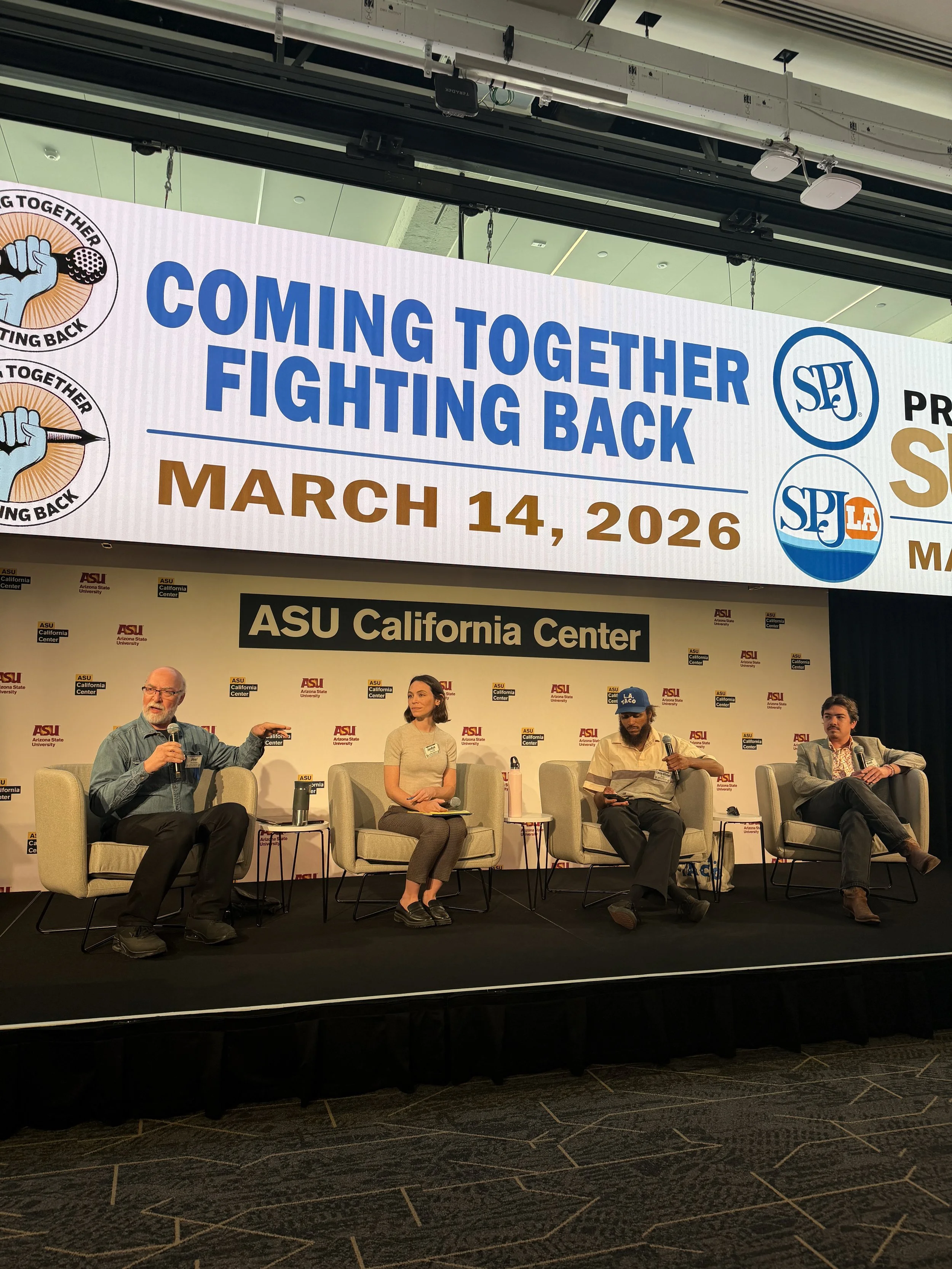
From left, Joel Bellman, Jordyn Ostroff, Lexis-Olivier Ray and Matt Tinoco participated in the Legal Rights & Security Protocols panel at the Coming Together, Fighting Back: Press Freedom Summit. (Photo by Natalie Bislamyan)
By Sara Catania
Embrace unconventional allies. Mount an all-fronts attack on harmful policies– from local to regional to national. Collaborate in and out of traditional channels. Flood the zone with journalism advocacy.
These are just a few of the tactics that surfaced at the Coming Together, Fighting Back: Press Freedom Summit, organized by the SPJ Los Angeles chapter on March 14 with the support of a grant from the SPJ Foundation.
The day-long gathering brought together a dedicated cohort of journalists, attorneys and other press freedom advocates to share learnings and challenges and to surface new opportunities for action, and to begin work on a new Press Freedom Playbook.
The Summit kicked off with a keynote and concurrent breakout sessions on legal rights, legislative advocacy and public engagement and education, followed by an afternoon dedicated to Playbook working groups focused on active input from all attendees.
“You could have stayed home to wring your hands. You could have sat on the couch to rehash our collective worries,” said SPJ/LA President Gretchen Macchiarella in her opening remarks. “Instead, you are here to take action, fight back and work collectively for what the constitution guarantees and the community deserves.”
Macchiarella, who is an associate professor of Journalism at California State University, Northridge, enlisted her students along with one from Loyola Marymount University to serve as Summit Documenters, capturing key takeaways from each session and taking photos and video throughout. Their work will provide the foundation for the post-Summit Press Freedom Playbook.
Caroline Hendrie, SPJ executive director and Summit keynote panel facilitator, emphasized the need for vigilance. “The public’s right to know is under siege by powerful interests who prefer propaganda to transparency,” she said. “The Society of Professional Journalists and our allies are fighting back.”
As journalists operate in an increasingly hostile and complex environment, advocating for a free press is “an act of daily optimism,” said Frank LoMonte, senior legal counsel for CNN and co-chair of the newly formed SPJ Advocacy Committee, during the Summit keynote panel.
Journalists must be vigilant in challenging gag rules and other legally vulnerable policies that limit access to critical sources, said LoMonte, who authored an issue brief on the subject during his tenure as director the Brechner Center for Freedom of Information at the University of Florida.
Beyond litigation, he said, it is imperative that journalists take the initiative to build a broader community. “There are fewer of us. We need more friends.”
Case in point: the Democracy Center at the Los Angeles-based Japanese American National Museum, a Summit sponsor. Executive Director Ann Burroughs noted that while journalism is among the least trusted of American institutions, museums remain among the most trusted. In early 2025 JANM was the first museum to publicly decry the Trump administration’s rollback of civil rights, including attacks on birthright citizenship, dismantling of diversity initiatives and a resurgence of actions under the Alien Enemies Act. It was–and remains– a somewhat lonely position. She suggested that by banding together, journalism and civic institutions could “inoculate” themselves from attack and shore up the public’s access to a robust civic life.
“We must reckon with our roles,” Burroughs said. “Not as bystanders, but as participants in shaping civic life.”
“Defending press freedom is a shared responsibility that requires collective action,” Macchiarella wrote in her Summit program message. “In this fractured media environment, there are fewer institutions holding us together. That’s where the Society of Professional Journalists plays a crucial role.”
The Summit exemplified SPJ’s renewed commitment to advocacy on behalf of press freedom, a core tenet of the organization’s mission that has been driven forward by Hendrie, as well as Summit speakers Chris Vaccarro, SPJ president, Nick Budnick, chair of the Freedom of Information Committee of SPJ Greater Oregon, and Ginny LaRoe, advocacy director for the California-based First Amendment Coalition.
LaRoe was recognized by SPJ Northern California with the 2024 Distinguished Service to Journalism Award for her work advancing free speech and a free press. During the Summit keynote panel, LaRoe urged journalists to embrace “activism for the cause of journalism,” to prioritize “community over competition,” and “stand up for journalism together.”
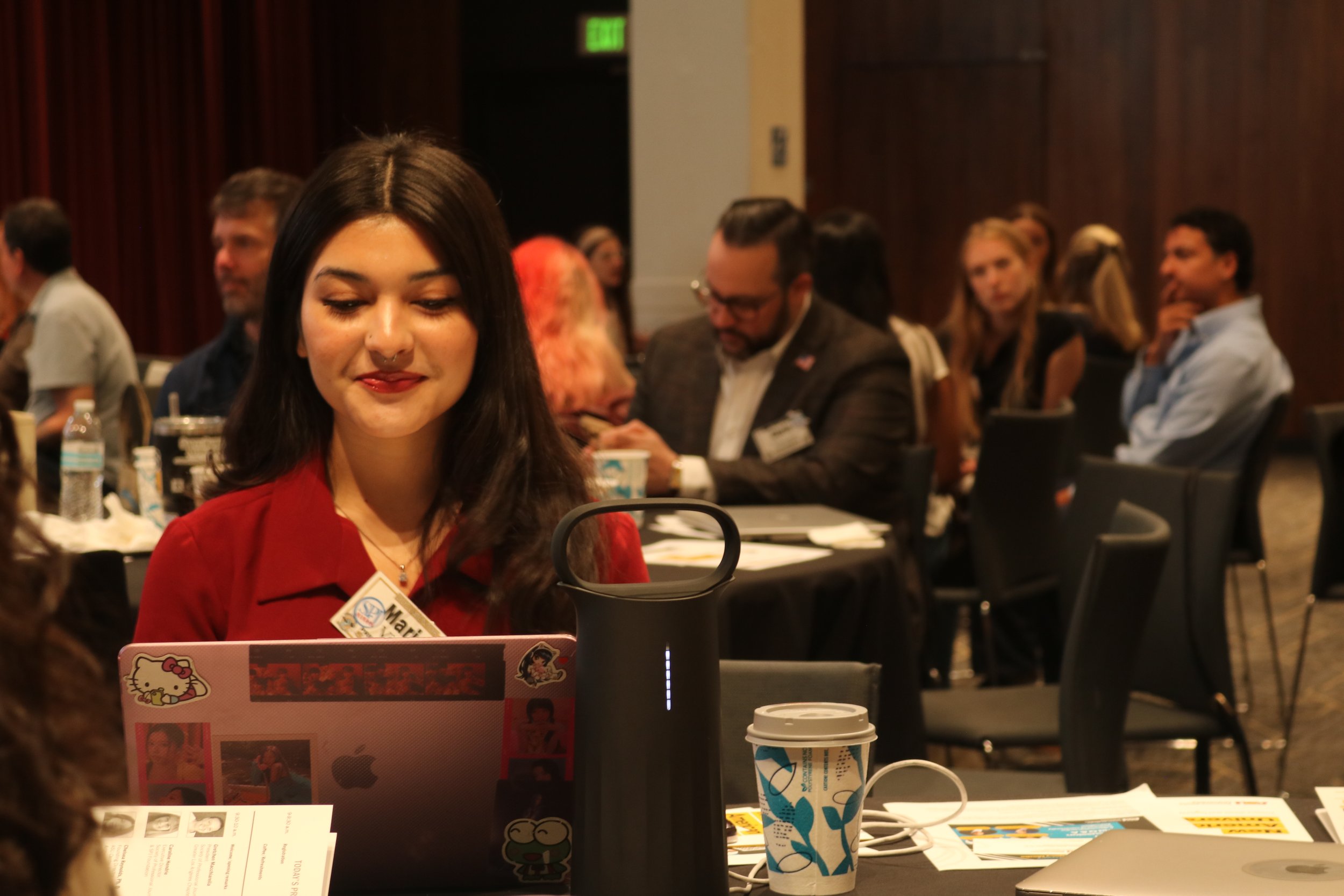
Participants take notes at the Coming Together, Fighting Back: Press Freedom Summit. (Photo by Sam Jorge-Vazquez)
Adam Rose, deputy director of advocacy for the Freedom of the Press Foundation, said journalists need to “flood the zone with journalism advocacy,” getting comfortable with lobbying on their own behalf.
“Journalists are allergic to making themselves the story,” Rose said. “That needs to change.”
One model for that change might be Lexis-Olivier Ray, an investigative reporter at LA Taco and past SPJ/LA distinguished journalist award recipient., In a breakout session at the event, he gave specific recommendations for navigating police interference in reporting.
Ray live-broadcasts and timestamps police challenges to his rights. Documenting “street-level” violations provides the evidentiary trail necessary to challenge systemic misconduct and influence future policy, Ray said.
In 2025, he sued the Los Angeles Police Department, alleging officers repeatedly interfered with his constitutional right to document sweeps of homeless encampments, holding him in a patrol car in handcuffs and threatening him with arrest. He was most recently detained and released in January without charge while covering a protest against immigration raids.
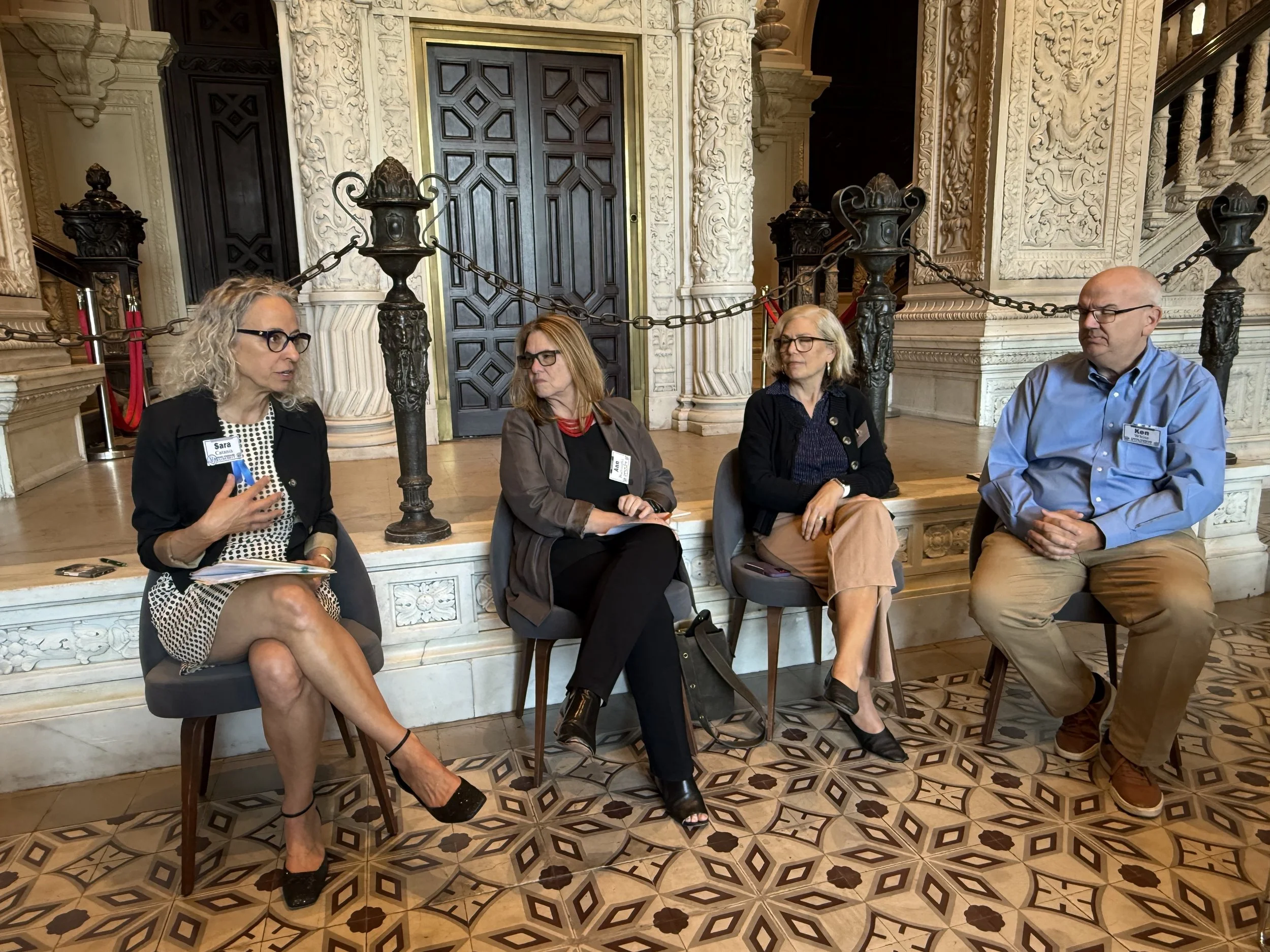
Sara Catania, head of the Summit Task Force, leads a session on Press Freedom Public Education and Engagement with JANM executive director Ann Burroughs, Golden State Executive Editor Mariel Garza and First Amendment Attorney Ken White. (Photo by Natalie Bislamyan)
Mariel Garza, the co-founder and executive editor of Golden State, who resigned from her position as the editorials editor of the Los Angeles Times after the newspaper’s owner blocked the editorial board’s plans to endorse Vice President Kamala Harris for president, said one of the more insidious and less-spoken-about challenges is the pressure on journalists and newsrooms to self-censor under pressure. Journalists, she said, need to “speak up and speak out.”
Sara Catania is secretary/treasurer of SPJ/National and a board member of SPJ/LA
The Summit was made possible by a grant from the SPJ Foundation, with additional support from the JANM Democracy Center and the Southern California News Group. Arizona State University donated the venue –the historic Herald Examiner building, restored and renovated by ASU and now home to their California Center– along with planning and event support staff.
The Summit was organized and executed over six months with the volunteer labor of an SPJ/LA Summit Task Force led by Sara Catania and including LA chapter board members Joel Bellman, Tom Bray, Sitara Nieves and Robi Wax, with additional support from chapter president Gretchen Macchiarrella, treasurer Gwen Muranaka and board member Vanessa Franko. Additional day-of-Summit support was provided by SPJ/LA board members Ryan Carter, Aaron Day, Lori Streifler and Dave Zahniser. The student documenters were Kayla Christian, Toby Douglas, Estelle Frugoli, Olivia Silvester, Maria Vital, Natalie Bilamyan, Sam Jorge-Vazquez and Marcus Nocerino.